Electrical Thermal Imaging: What It Finds and How Often to Scan
Summary
Electrical thermal imaging finds loose connections, overloads and failing parts early. What a scan detects, how often to schedule one and what makes it valid.
- Written by
- Tyler Weiss
- Published

Last updated: November 13, 2026
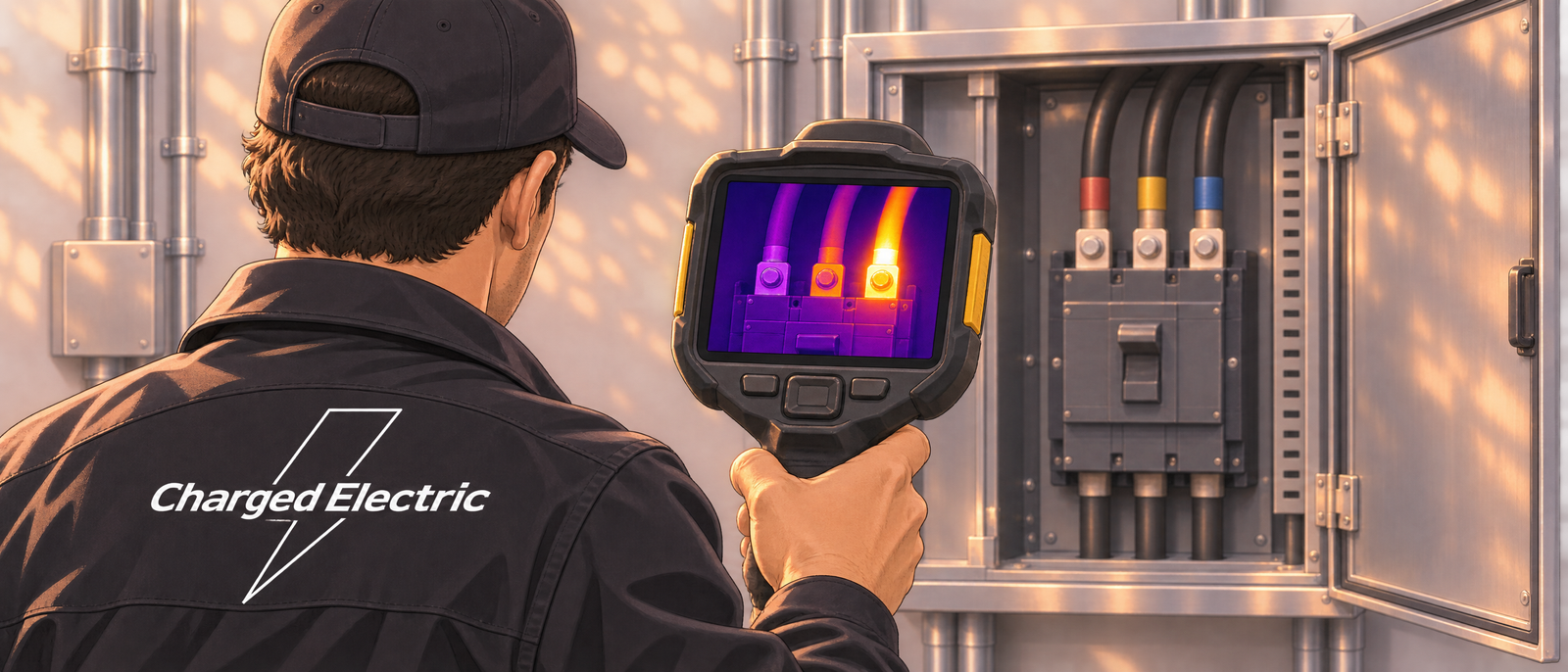
Electrical thermal imaging is an infrared scan of energized electrical equipment that shows heat the eye cannot see. A loose lug, an overloaded breaker or a failing motor bearing runs hotter than it should long before it fails, and a thermal camera picks that up while the plant keeps running. Most facilities should scan their electrical distribution at least once a year, and every six months for gear in poor condition or harsh environments. That is the interval NFPA 70B sets for infrared thermography.
This guide covers what an infrared thermography inspection finds, how serious a hot spot is, how often to schedule one, what makes a scan valid, and how food plants fit scans around production and sanitation. Charged Electric, a licensed electrical contractor in New Hamburg, Ontario, runs thermal imaging as part of its electrical preventative maintenance programs for plants, warehouses and commercial buildings.
What is electrical thermal imaging?
Electrical thermal imaging, also called infrared thermography or a thermographic inspection, uses an infrared camera to measure the surface temperature of electrical components while they carry load. Current flowing through resistance makes heat, so any connection or part with more resistance than it should have runs hot. The camera turns that heat into an image, and the thermographer compares each component against similar parts under similar load and against the room around it.
Resistance rises for ordinary reasons. Liberty Mutual's loss prevention guidance lists normal wear, vibration, chemical contamination, corrosion, fatigue, and expansion and contraction with load and temperature changes, plus faulty assembly or installation. None of these show up on a visual walk-through. All of them show up as heat.
Because the scan is done with equipment energized and loaded, it does not need a shutdown. Problems found during the scan are repaired later, in a planned window.
What an infrared scan finds
A thermal scan of a plant's electrical system finds problems in five main areas.
Equipment | What the scan finds |
|---|---|
Panels, switchboards and switchgear | Loose or corroded lugs and terminations, overloaded breakers, failing breaker contacts |
Motor control centres and starters | Hot contactors, overloads and terminations, phase imbalance between legs |
Disconnects, fuses and splitters | Loose fuse clips, undersized or deteriorated fuses, hot splitter connections |
Transformers | Overheating windings and connections, and in oil-filled units, signs of low oil level |
Motors, drives and driven equipment | Hot motor connections, bearing wear, misalignment, overheated couplings, belts and gearboxes |
Insurers that run their own infrared surveys list the same faults. Aviva Canada says scans find faulty wiring, overloaded circuits, unbalanced loads and loose or deteriorated connections, along with overheated motors, joints, belts, bearings and shafts. Northbridge Insurance notes that thermal imaging can also identify transformer issues involving oil levels and detect motor and bearing wear.
A scan can also find the opposite: a component that should be warm and is cold, which usually means a blown fuse, an open phase or a circuit that is not carrying load.
How often scans find something
More often than most maintenance managers expect. CNA Insurance reviewed 6,445 infrared surveys it ran between 2005 and 2010 and found 47,077 faults, an average of 7.3 per survey. Almost half the surveys, 3,067 of them, turned up at least one fault rated serious or critical.
How serious is a hot spot?
Severity is judged by temperature rise, called delta T (ΔT). A thermographer compares a hot component against a similar component under similar load, or against ambient air. The InterNational Electrical Testing Association's maintenance testing specification (NETA MTS) gives suggested actions for each range. This version is from the 2007 edition, as reproduced in a Fluke and Shermco application note.
ΔT vs similar component | ΔT vs ambient air | Suggested action |
|---|---|---|
1°C to 3°C | 1°C to 10°C | Possible deficiency, warrants investigation |
4°C to 15°C | 11°C to 20°C | Probable deficiency, repair as time permits |
Not specified | 21°C to 40°C | Monitor until corrective measures can be made |
Over 15°C | Over 40°C | Major discrepancy, repair immediately |
Load matters to these numbers. Heating rises roughly with the square of the current, so a connection that reads 10°C hot at half load can be far hotter at full load. That is why the circuit load at the time of the scan belongs in the report beside every reading.
How often should you schedule an infrared thermography inspection?
At least once a year for most electrical equipment, and every six months for equipment in poor condition. That is the interval in NFPA 70B, the Standard for Electrical Equipment Maintenance.
NFPA 70B used to be a recommended practice. The 2023 edition made it a standard, and its maintenance interval table sets infrared thermography for all equipment at 12 months for equipment in good or fair condition and 6 months for equipment in poor condition. The current edition is 2026.
In Canada, CSA Z463 is the standard for maintenance of electrical systems. It takes a risk-based approach, so the right frequency for a given piece of equipment depends on how critical it is, the environment it works in and what earlier inspections found.
In practice, scan more often than once a year when:
The environment is hard on equipment. Washdown zones, corrosive atmospheres, heat, dust and vibration all speed up the causes of resistance.
The equipment is critical to production. If one MCC feeds a line that cannot go down, a six-month scan costs less than one unplanned stop.
The load has changed. New equipment, a new shift or an expansion changes what every upstream connection carries.
The last scan found problems. A rescan after repairs confirms the fix and resets the baseline.
Maintenance has been missed. Equipment that skipped its last maintenance cycles should be treated as poor condition until a scan says otherwise.
Insurers say the same thing. Liberty Mutual's guidance is that some facilities may be required to inspect their electrical distribution system annually, but frequency should be set by regulations, equipment condition and the findings of the last survey.
What makes a thermal scan valid
A scan is only as good as the conditions it was taken in. Four things separate a useful infrared inspection from a set of pretty pictures.
Equipment under load
Heat comes from current, so a lightly loaded circuit hides its problems. NFPA 70B's 2023 edition calls for scans at normal circuit loading, and where that is not possible, at not less than 40% of nominal load. Liberty Mutual recommends scanning under peak load where possible. The practical answer is to scan during production, on a normal shift, not on a quiet weekend.
A clear line of sight
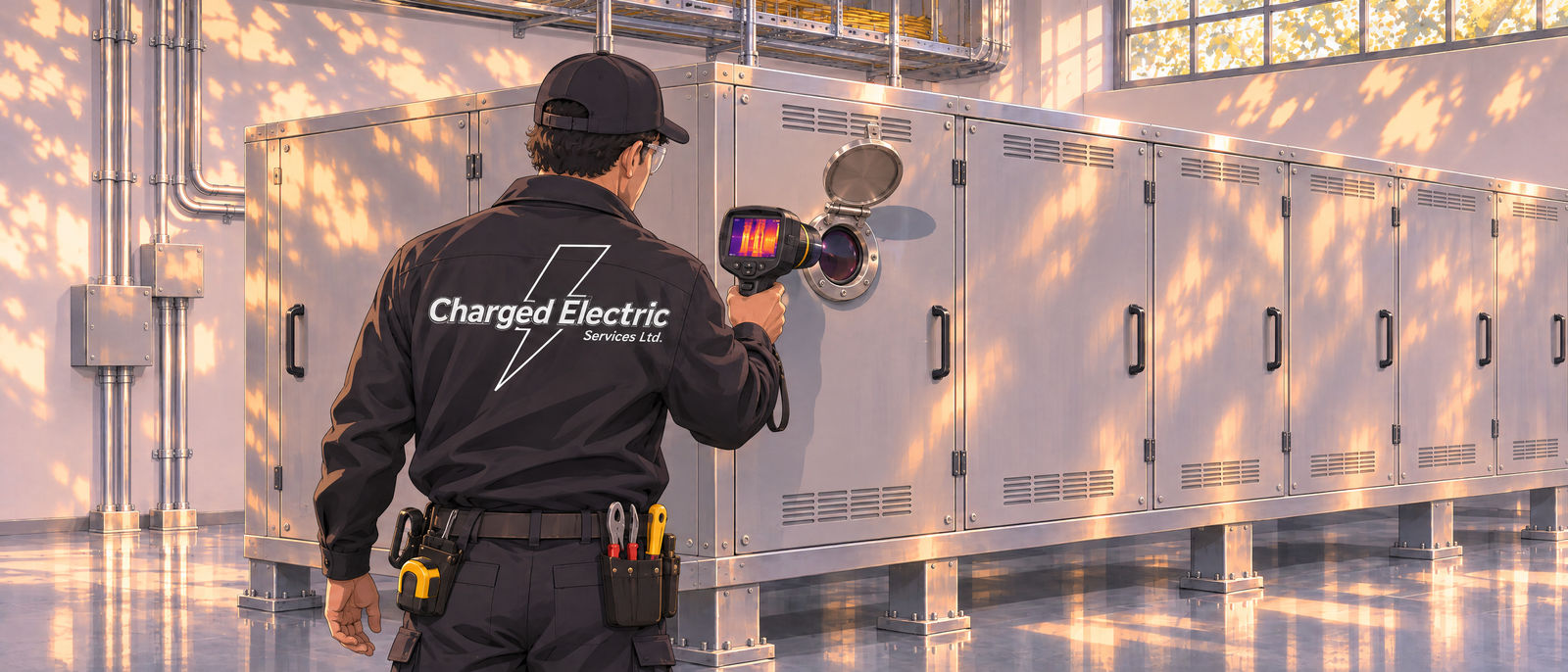
An infrared camera cannot see through a steel cover. NFPA 70B calls for accessible covers to be removed for a clear line of sight. The alternative is an infrared window, which lets the camera see inside the enclosure without exposing anyone to live equipment. For equipment scanned often, installing IR windows reduces both the time and the risk of each scan.
Correct camera settings
Bare metal reflects infrared and reads cooler than it really is. Fluke explains that emissivity correction is unreliable on shiny surfaces and recommends measuring a non-reflective target such as electrical tape, with emissivity and reflected temperature set correctly. A good report records those settings with each image.
A trained thermographer working safely
Thermography certification runs in three levels, and Aviva Canada advises businesses to make sure the technician is at least Level 1 certified. Safety matters as much as skill. Under NFPA 70E, scanning from outside the restricted approach boundary carries no arc flash likelihood, but that rating does not cover opening doors or removing covers on energized equipment. Removing covers needs a risk assessment and the right arc-rated PPE under NFPA 70E and its Canadian counterpart, CSA Z462.
Thermal imaging in food processing plants
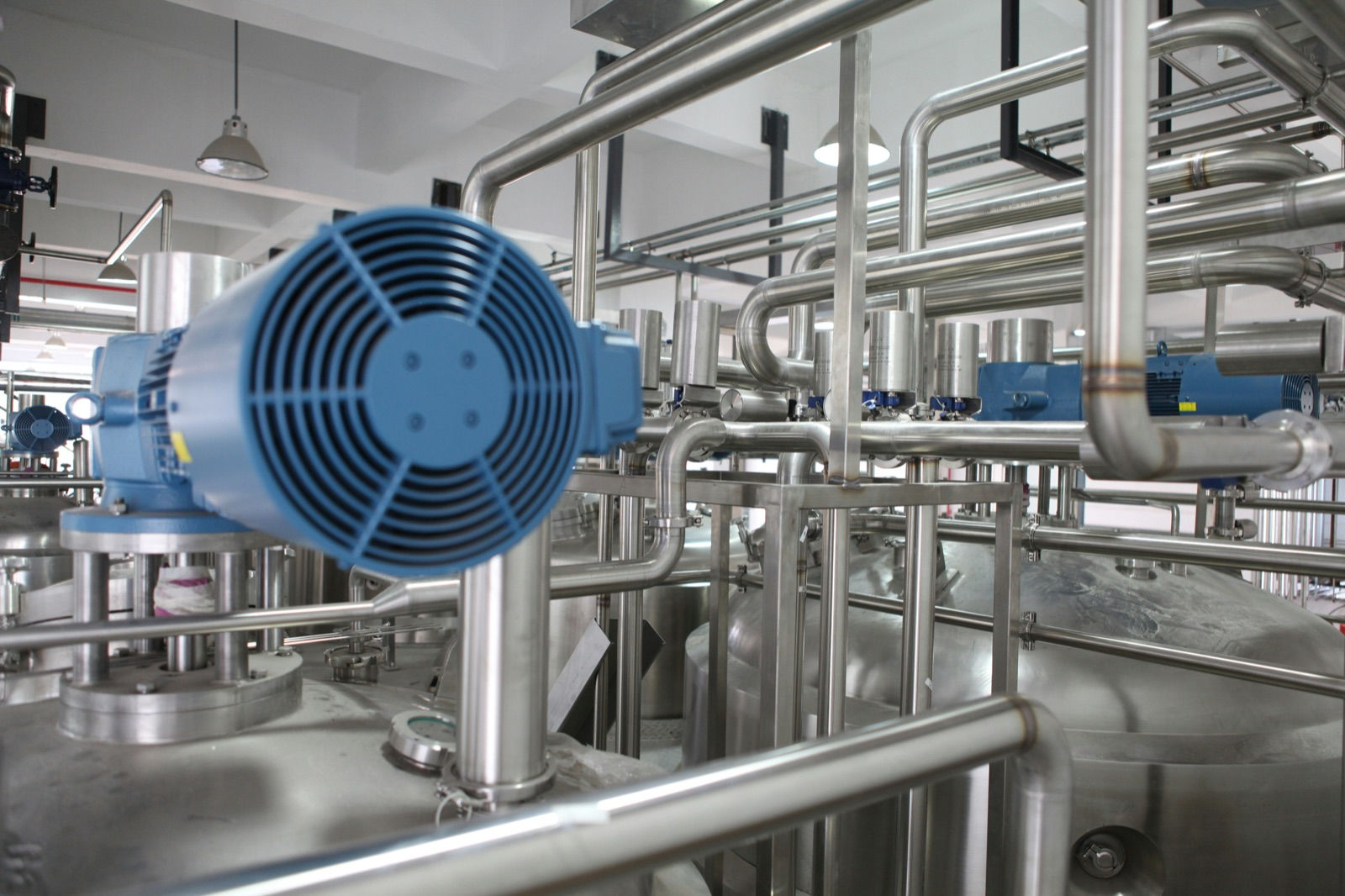
Food plants are hard on electrical equipment. Daily washdown, caustic sanitation chemicals and the swing from a hot wash bay to a freezer all work against enclosures, seals and connections, and corrosion is one of the causes of rising resistance that thermal imaging catches.
A food plant scan program should cover:
Panels, disconnects and motor connections on the process floor, scanned with the line running, since that is when hot spots show.
Refrigeration and freezer circuits, so the product in the cooler is not riding on a failing breaker. Refrigeration OEM GEA includes a scan of all electrical control panels with an infrared camera in its condition-based monitoring for refrigeration plants.
Washdown-zone enclosures, where a hot spot near a fitting can point to water or chemical ingress that should be fixed before it becomes a fault.
The scan itself happens during production. Any repairs that need equipment de-energized go into a sanitation window, an off-shift or a scheduled shutdown. Charged Electric builds preventative maintenance for food processing plants around that calendar, and gear that keeps failing in the same washdown zone gets respecified through its sanitary electrical installations work.
What a good thermal imaging report includes
The report is what turns a scan into repairs and a maintenance record. A complete infrared inspection report should include:

An infrared image and a matching visible-light photo of every problem found
The location and equipment ID, so an electrician can find it again
ΔT, the reference it was measured against, and a severity rating
Circuit load at the time of the scan, plus emissivity, reflected temperature and ambient conditions
A recommended action and priority for each finding
The thermographer's name and qualification
A comparison against the last scan, so trends show up
Keep every report. Readings compared year over year show a connection getting worse before it reaches the repair-immediately range, and the reports are the maintenance records an insurer, auditor or ESA inspector asks to see.
Why it matters: electrical fires in Ontario workplaces
Electrical faults start fires in Ontario industrial buildings every year. The Electrical Safety Authority's 2024 Ontario Electrical Safety Report, using Office of the Fire Marshal data, counts 513 fires with electricity as the ignition source in industrial buildings from 2019 to 2023, plus 237 in mercantile and 169 in business occupancies.
Loose, overloaded or deteriorating connections and components heat up before they ignite, and that heat is exactly what a thermal scan is designed to catch. A scan finds the problem while it is still a repair, scheduled into a shutdown, rather than a fire, a lost line or an insurance claim.
How Charged Electric runs thermal imaging
Charged Electric runs infrared scans as part of its preventative maintenance programs for factories, food plants, warehouses and commercial buildings across Waterloo Region, Toronto, the GTA and Southwestern Ontario.
Scanned under load, during production. Panels, MCCs, splitters, disconnects and motor connections are scanned while equipment is running, which is where the evidence is.
Risk-based frequency. Programs follow the risk-based approach of CSA Z463: annually for most facilities, and more often for washdown zones, heavily loaded gear and equipment critical to production.
A written report after every visit. Findings, corrections and thermal images, with readings trended visit to visit.
Repairs quoted separately. Deficiencies are priced before any work starts and fixed in a planned shutdown. Drive and motor problems go to the same electricians behind its drive and motor services.
Start small. Facilities can start with a single baseline scan or go straight to an annual program.
Charged Electric is ECRA/ESA licensed (7011473), fully insured and an ISNetworld Member Contractor, and its crews offer 24/7 emergency service if something fails between visits.
Electrical thermal imaging questions
How often should infrared thermography be done?
At least once a year for most electrical equipment, and every six months for equipment in poor condition, which is the interval NFPA 70B sets for infrared thermography. Under the risk-based approach of CSA Z463, equipment in harsh environments, critical to production, or with recent findings or load changes should be scanned more often.
What does thermal imaging detect in electrical panels?
It detects loose or corroded connections and terminations, overloaded circuits, unbalanced phases, failing breakers and fuses, and undersized conductors. In motors and driven equipment, it also finds bearing wear, misalignment and overheated couplings. A cold spot where there should be heat can point to a blown fuse or an open phase.
Do electricians use thermal imaging?
Yes. Industrial and commercial electricians use thermal cameras for preventative maintenance scans and for troubleshooting. An electrician who does the scan can also make the repair, and understands what the load on each circuit should be when interpreting the image.
Can thermal imaging be done without shutting down?
Yes, and it has to be. The scan only works while equipment is energized and loaded, so it is done during normal operation. Covers may be opened under the right safety precautions, or infrared windows can be installed so covers stay closed. Repairs are what need a shutdown, and they are scheduled afterward.
How much does an infrared electrical inspection cost?
Cost depends on how much equipment is scanned, how many buildings or sites are included, how many covers need to be removed and whether the scan is a one-time baseline or part of an annual program. Most contractors quote per site after reviewing the equipment list. Against that, one prevented failure on a production line usually costs far more than the scan.
Is an infrared inspection worth it?
For most plants, yes. A scan finds problems that a visual inspection cannot, without a shutdown. In CNA Insurance's review of more than 6,000 surveys, the average survey found 7.3 faults, and almost half found at least one serious or critical problem.
Conclusion
Electrical thermal imaging is the fastest way to find the loose connections, overloads and failing components that cause breakdowns and electrical fires, and it does it without stopping production. Schedule an infrared thermography inspection at least once a year, and every six months for critical gear or harsh environments, make sure the scan is done under load by a trained thermographer, and keep every report so trends show up.
To book a baseline thermal scan or set up an annual program, contact Charged Electric or call +1 (519) 469-9797. ECRA/ESA Licensed 7011473. Fully insured.

Author
Tyler Weiss
Tyler Weiss is a Master Electrician and the founder of Charged Electric, an ECRA/ESA licensed (7011473) and ISNetworld prequalified electrical contractor based in New Hamburg, Ontario. Since 2016, Tyler and his crews have wired homes and businesses across Kitchener-Waterloo and Wilmot Township while specializing in the work most electricians turn away: PLC programming, stainless steel control panels and washdown-rated installations for food processing plants. Every job is wired to the Ontario Electrical Safety Code and backed by 24/7 emergency response.
View all posts by Tyler Weiss →Tags
Share this post
Leave a comment
Your email address will not be published.
Your comment will be reviewed by an admin before it is published.
The 8 Best Multi-Site Electrical Contractors in Ontario for 2026
Compare the 8 best multi-site electrical contractors in Ontario for retail, restaurant and bank chains: coverage, 24/7 service, rollouts and ESA licensing.
Ontario Electrical Safety Code: What Facility Managers Need to Know
What facility managers need to know about the Ontario Electrical Safety Code: the 29th edition, owner duties, ESA notifications and who can do the work.
Commercial and Industrial Electrician in Kitchener
Commercial and industrial electrician in Kitchener for plants, food processors and commercial buildings. 24/7 service, ESA licensed, ISNetworld member.