Ontario Electrical Safety Code: What Facility Managers Need to Know
Summary
What facility managers need to know about the Ontario Electrical Safety Code: the 29th edition, owner duties, ESA notifications and who can do the work.
- Written by
- Tyler Weiss
- Published

Last updated: November 16, 2026
The Ontario Electrical Safety Code (OESC) is the law for every electrical installation in the province, including every building a facility manager runs. The current edition is the 29th edition (2024), which is the 2024 Canadian Electrical Code with Ontario's own amendments. It took effect on May 1, 2025, and the Electrical Safety Authority (ESA) enforces it. For a facility manager, the code does more than govern how an electrician wires a panel. It also puts duties on the owner: keep a record of electrical work, report serious incidents within 48 hours, fix dangerous conditions when ESA orders it, and use only approved equipment.
This guide explains what the current code is, what changed for commercial and industrial buildings, who is allowed to do electrical work in your facility, how notifications and plan review work, and which workplace and fire code rules sit beside it. Charged Electric, a licensed electrical contractor in New Hamburg, Ontario, handles ESA notifications and inspections on every job for plants, warehouses and commercial buildings across Southwestern Ontario and the GTA.
The Ontario Electrical Safety Code at a glance
Item | Detail |
|---|---|
Current edition | 29th edition (2024) |
Based on | CSA C22.1:24, the Canadian Electrical Code, Part I (26th edition), plus the Ontario Amendments |
In force since | May 1, 2025 |
Adopted by | O. Reg. 164/99 (Electrical Safety Code), as amended by O. Reg. 449/24 |
Enforced by | The Electrical Safety Authority, under Part VIII of the Electricity Act, 1998 |
Previous edition | 28th edition (2021), in force May 5, 2022 |
Next edition | Not announced as of November 2026 |
The scope is as wide as it gets. O. Reg. 164/99 says every act or omission in connection with the generation, transmission, distribution, retail or use of electricity in Ontario must comply with the Electrical Safety Code. That covers the contractor doing the work, the owner of the building and the people operating it.
How the Ontario code differs from the Canadian code
Ontario adopts the national Canadian Electrical Code and adds its own amendments. According to ESA's code FAQ, there are very specific Ontario administrative requirements and few technical differences. The biggest change is in Section 2: Ontario replaces the national administrative rules with its own rules on notifications, plan review, owner records, incident reporting and ESA orders. In the code book, Ontario amendments are marked with a black trillium symbol and printed in italics.
What changed in the 29th edition for commercial and industrial buildings
ESA's summary of the 2024 code lists several changes that matter to facilities:
Plan review now covers more EV charging. Outside a single dwelling, plans must go to ESA before work starts when the total nameplate rating of EV charging equipment, existing plus new, exceeds 20% of the rating of the service equipment.
Energy management systems are recognized more broadly. The Ontario Amendments permit energy management systems to monitor and control electrical loads, and where they do, the demand load can be calculated at the maximum the system allows. That matters for a site adding EV chargers or electric process loads to a service that is already close to full.
Stand-alone generation comes under plan review. Plan review now includes stand-alone electric power generating equipment and systems.
Higher allowable voltages for EV charging equipment.
The national 2024 Canadian Electrical Code also added new requirements aimed at the safety of electrical maintenance personnel, and revised requirements for energy storage, renewable systems and healthcare facilities.
One change after publication. A Director's Order that took effect July 6, 2026 raised the plan review threshold for renewable generation, energy storage and bi-directional EV charging equipment from 10 kW to 12 kW. ESA's FAQ on the order says submissions made before July 6, 2026 stay on the 10 kW threshold.
Which edition applies to a project? It depends on when the work was filed. ESA's 2024 OESC FAQ says an installation must meet the code in effect when the notification was filed or the plans were submitted. Work filed before May 1, 2025 can be completed under the 28th edition. But if a contractor chooses to apply any part of the 2024 code after that date, the entire installation must comply with it.
Your duties as owner or facility manager
The Ontario Amendments to Section 2 put several obligations directly on owners, their agents and operators, not just on contractors.
Keep a record of electrical work (Rule 2-003). In any public building or commercial or industrial establishment, the owner, owner's agent or operator must keep a record of all electrical installation work acceptable to ESA and produce it to an inspector at any time.
Report serious electrical incidents within 48 hours (Rule 2-007). An owner, contractor or operator must report any serious electrical incident it is aware of to ESA within 48 hours. That includes any fire, explosion or condition suspected of being electrical in origin that might have caused a fire, explosion, loss of life, critical injury or damage to property, and any contact with or fire in equipment over 750 V. Leave the scene as it is: nothing involved may be carried away or destroyed without an inspector's permission.
Have water-damaged equipment evaluated (Rule 2-032). Electrical equipment exposed to water, after a flood or a sprinkler discharge, must be evaluated before it goes back into service.
Fix dangerous conditions when ordered (Rule 2-018). ESA can require an owner or occupant to correct a condition dangerous to persons or property within a set time. If the owner refuses or neglects to comply, ESA can disconnect the supply, and power stays off until the notice is fully complied with.
Leave ESA tags and seals alone. No one may remove an ESA tag, seal or warning without permission.
Use approved equipment (Rule 2-022). Electrical equipment must be approved before it is used. In practice, that means a certification mark from one of the bodies on ESA's list of recognized certification marks, such as CSA, UL or Intertek, or a field evaluation label. ESA notes that CE and FCC marks are not recognized for electrical safety, and its Bulletin 2-7-41 states that CE marking is not recognized in Canada. That catches facilities that import production equipment from Europe or Asia: a machine without a recognized mark needs a field evaluation before it is connected.
The consequences are real. Under the Electricity Act, 1998, failing to comply with the code or with an ESA order is an offence. A person can be fined up to $50,000, jailed for up to a year, or both, plus up to $5,000 for each day an order is ignored. A corporation can be fined up to $1,000,000, and its directors and officers can be charged personally.

Who is allowed to do electrical work in your facility?
This is the question facility managers ask most, and the answer runs through three separate laws. Being exempt under one does not make you exempt under the others.
Hiring an outside company
Anyone you hire to do electrical work must hold an electrical contractor licence. O. Reg. 570/05 says no person shall operate an electrical contracting business without one, and ESA's guidance for property owners is direct: if you are hiring a person or company to do electrical work, they must be a licensed electrical contractor. Licensed contractors show their ECRA/ESA licence number on their vehicles, business cards and estimates, and you can check it on ESA's Find a Contractor tool.
Your own maintenance staff
Licensing. O. Reg. 570/05 does not apply to work done on electrical equipment within an industrial establishment by the owner, operator or an employee of the owner or operator. The regulation defines industrial establishment broadly, as an office building, factory, arena, shop or office. So your own employees do not need a contractor licence to work in your own building. This applies only to true employees. A self-employed electrician you bring in on contract is not your employee and must work under a licensed electrical contractor.
Notifications still apply. The licensing exemption does not remove the duty to file a notification of work with ESA. The code defines "contractor" to include anyone who performs electrical work, for their own use or for someone else, paid or not. ESA's own guidance for property owners says notifications and ESA review of the work are almost always required, even if you have an electrician on staff.
Trade certification. Under Ontario's skilled trades law, Electrician (Construction and Maintenance) 309A and Electrician (Domestic and Rural) 309C are compulsory trades, so the person doing that work generally needs a certificate of qualification or must be a registered apprentice. Industrial Electrician 442A is a voluntary trade. The regulations carve out some work by people permanently employed in an industrial plant, but "industrial plant" is not defined, and it is a narrower idea than the "industrial establishment" in the licensing rules. If you rely on in-house staff for electrical work, confirm with Skilled Trades Ontario which certification your situation needs.
Notifications, plan review and the Certificate of Acceptance
Notification of work
What most people call an electrical permit is a notification of work. Under Rule 2-004, the contractor files it with ESA before the work starts, or within 48 hours after it starts where filing first is not practicable. The exemptions in Rule 2-005 are narrow and mostly limited to owner-occupied homes, so in a commercial or industrial building, assume a notification is needed.
Plan review for larger installations
Some installations need plans submitted to ESA and reviewed before work begins. Under Rule 2-010, that includes:
A three-phase service or standby generation of 400 A or more, or a single-phase service of 600 A or more
A feeder greater than 1,000 A
An emergency power supply for life safety systems (not battery unit equipment)
Any installation operating above 750 V
EV charging equipment, outside a single dwelling, whose total nameplate rating exceeds 20% of the service rating
Renewable generation, energy storage or bi-directional EV charging with an output rating over 12 kW
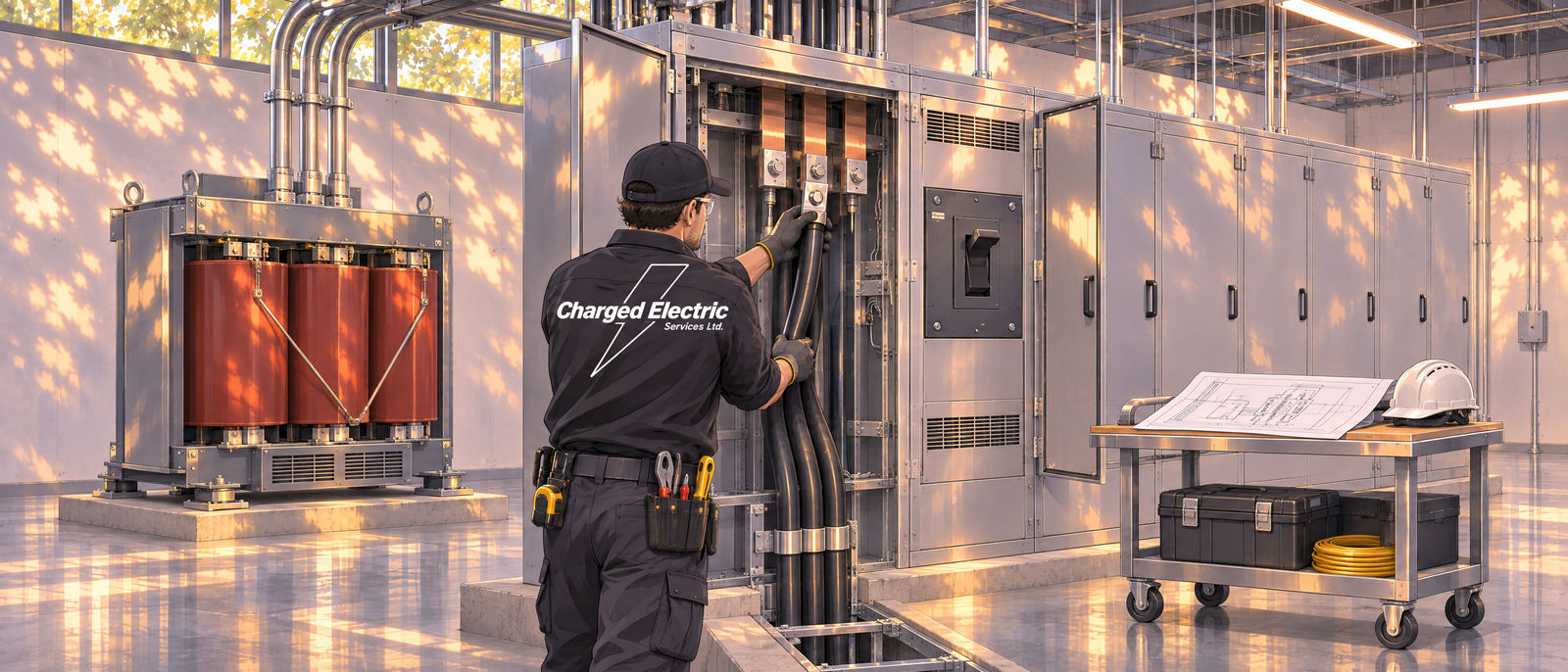
Plan review is not needed for maintenance and repair, or for like-for-like replacement where the existing installation is compliant. Where it does apply, it adds time to a project schedule. A service upgrade or new transformer in a plant usually crosses the 400 A threshold, so build plan review into the timeline before ordering long-lead gear.
Certificate of Acceptance
Once the work is reviewed and passes, ESA issues a Certificate of Acceptance to the person who filed the notification. It is your proof that the work meets the Ontario Electrical Safety Code. Ask your contractor for a copy of every certificate and keep it with your Rule 2-003 records.
Options for facilities with frequent routine work
Large facilities with in-house maintenance staff doing routine electrical work have two options so they are not filing for every small job:
Periodic inspection (Rule 2-006). The owner or occupant of a manufacturing, mercantile or other building can file a notification covering routine maintenance and operation work done at frequent intervals. Once ESA accepts it, that routine work is covered for the period of the acceptance.
ESA Continuous Safety Services. ESA's program for businesses offers a dedicated inspector for one flat annual fee based on the size and complexity of the site. Routine work is logged online for review instead of requesting an inspection for each job. Work outside the routine scope still needs its own notification.
When ESA finds a defect
If an inspection finds a defect, ESA issues a defect notice and the work has to be corrected within the time the notice sets. If it is not fixed, ESA can disconnect the supply. Charged Electric handles ESA defect corrections, from the repair to the reinspection.
Workplace safety rules that sit beside the code
The OESC governs the installation. The safety of the people working on it falls under Ontario's Occupational Health and Safety Act. For factories, warehouses, shops and offices, the key regulation is Regulation 851, Industrial Establishments:
Section 40: electrical equipment must be suitable for its use and certified.
Section 41: rooms with exposed live parts need a conspicuous sign forbidding entry by unauthorized persons.
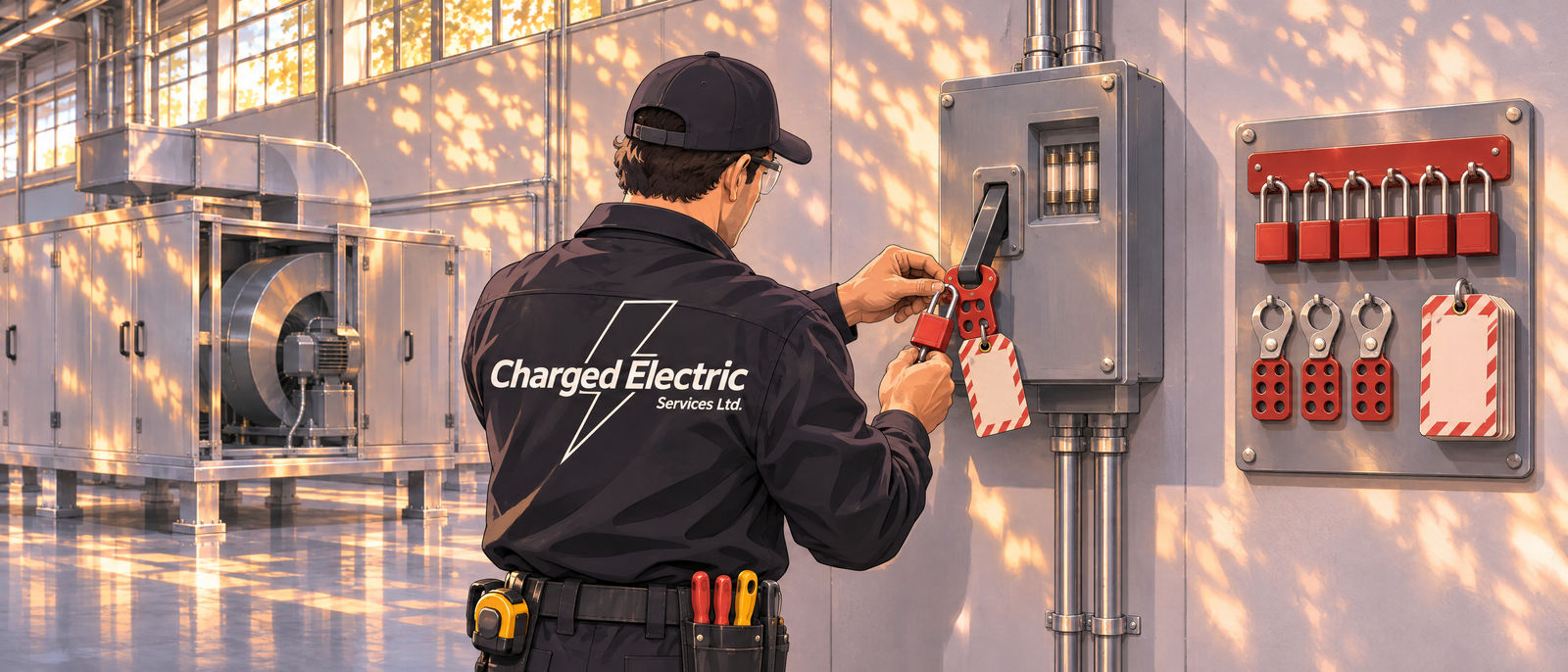
Section 42: power must be disconnected, locked out and tagged before work on or near live exposed parts, and the employer must establish and implement written lockout procedures. Narrow exceptions apply to adequately grounded conductors and to some work under 300 V.
Section 42.1: where disconnecting is not practical, live work needs protective equipment and procedures, and at 300 V or more, a competent person able to perform rescue must be available and able to see the worker. That rescue-person requirement does not apply to equipment testing and troubleshooting.
CSA Z462 and CSA Z463. CSA Z462 is the Canadian standard for workplace electrical safety, covering arc flash risk assessment, safe work practices and PPE, and ESA encourages training on it. CSA Z463 is the Canadian standard for maintenance of electrical systems. Neither is named in Ontario's electrical or workplace regulations, but both are widely used to meet the employer's general duty to keep workers safe and equipment maintained. Charged Electric's electrical preventive maintenance checklist shows how a maintenance program built on Z463 works in practice.
Fire code items facility managers own
The Ontario Fire Code makes the owner responsible for carrying out its provisions unless it says otherwise, and several of them involve electrical equipment:

Emergency lighting and exit signs (Div. B, 6.7.1.6 to 6.7.1.8). Inspect self-contained emergency lighting units monthly, test monthly that they work when primary power fails, and test them for their full design duration at least every 12 months. Other emergency lights must be inspected at least every 12 months. Exit signs with battery backup must be checked monthly and tested for their full duration every 12 months, and other exit signs inspected at least every 12 months. Charged Electric does emergency lighting inspection and testing with the dated log your fire inspector expects.
Fire alarm systems (Div. B, 6.3.2.2). Inspect and test in conformance with CAN/ULC-S536, including the annual inspection. See Charged Electric's fire alarm systems work.
Electrical rooms (Div. B, 2.4.1.1 and 2.6.4). Combustible materials must not accumulate in service rooms, electrical equipment vaults must not be used for storage, and vaults must be kept locked.
Records (Div. B, 1.1.2.1 and 1.1.2.2). Keep records of tests and inspections, noting what was done and when, at the building for at least two years, where the fire official can examine them. Electronic records are allowed.
How to get a copy of the Ontario Electrical Safety Code
The OESC is not free to download, because the Canadian Electrical Code it is built on is copyrighted by CSA Group. According to ESA, the 29th edition costs $217 as a PDF and $243 in hardcopy from CSA Group, and both include access to ESA's bulletins for the whole code cycle. CSA Group also offers view-only online access for users in Ontario.
The Ontario Amendments are free on ESA's website. For a facility manager, they are the most useful part to read, because the owner duties, notification rules and plan review triggers above all come from them. Read them together with the July 2026 Director's Order, which changed the 10 kW threshold in Rule 2-010 to 12 kW.
ESA bulletins are ESA's updates and interpretations of the code. ESA publishes sample bulletins on its website, and the full set comes with the purchased code.
Facility manager OESC compliance checklist
Use this as a quick check of where your facility stands:
Every outside electrical contractor holds a valid ECRA/ESA licence, checked on ESA's Find a Contractor tool
A notification is filed for every job, by your contractor or under your Rule 2-006 or Continuous Safety Services arrangement
Plan review is built into the schedule for services of 400 A or more, large feeders, life safety power, high voltage and large EV charging installations
A Certificate of Acceptance is on file for every completed job
A record of all electrical installation work is kept and ready for an inspector (Rule 2-003)
Staff know to report serious electrical incidents to ESA within 48 hours
All equipment carries a recognized certification mark or a field evaluation label, including imported machinery
Defect notices are corrected within the time ESA sets
Written lockout procedures are in place and followed (Reg. 851, s. 42)
Rooms with exposed live parts are signed, and electrical rooms and vaults are free of storage
Emergency lighting and battery-backed exit signs are checked monthly and duration-tested annually, and the fire alarm is inspected to CAN/ULC-S536, with dated records kept for at least two years
Best practice, not a legal requirement: a preventive maintenance program covers distribution equipment, with infrared scans at least once a year
How Charged Electric keeps facilities compliant
Charged Electric is a licensed electrical contractor (ECRA/ESA 7011473), founded in 2016 by Master Electrician Tyler Weiss and based in New Hamburg. It works in plants, food processing facilities, warehouses and commercial buildings across Waterloo Region, Toronto, the GTA and Southwestern Ontario.
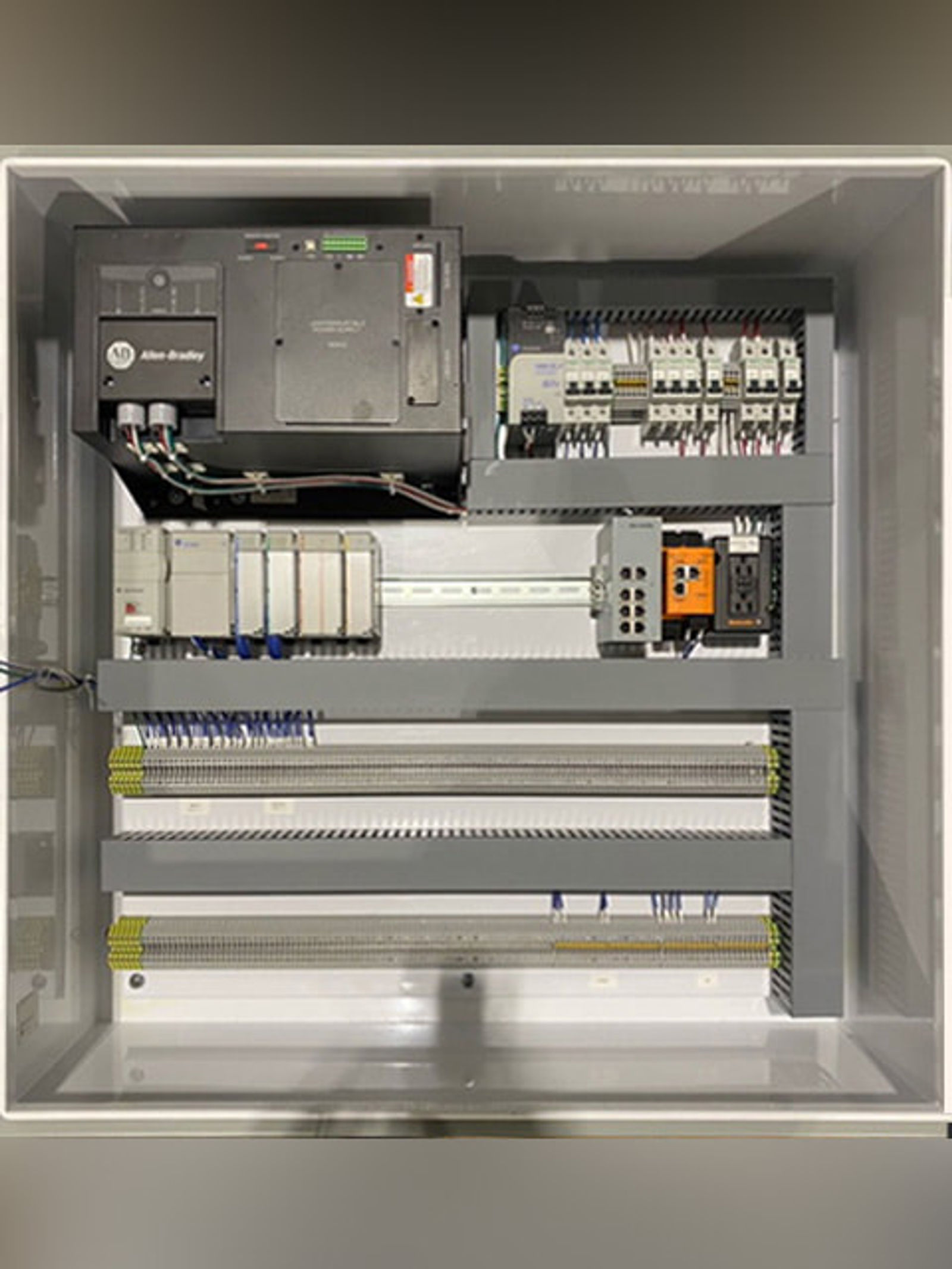
ESA handled on every job. Charged Electric files the notification, coordinates the inspection and hands over the Certificate of Acceptance. A job is complete when it passes.
Defect corrections. When an inspection fails, Charged Electric corrects the defects and gets the work reinspected.
Preventive maintenance programs that produce the written records insurers, auditors and inspectors ask for.
Emergency lighting and fire alarm inspection and testing, with dated logs.
ISNetworld Member Contractor, maintaining a B or higher score, for facilities that prequalify their contractors.
24/7 emergency service if something fails.
Ontario Electrical Safety Code questions
What is the current edition of the Ontario Electrical Safety Code?
The 29th edition (2024). It is based on CSA C22.1:24, the 2024 Canadian Electrical Code, Part I, with Ontario's amendments, and it took effect on May 1, 2025, under O. Reg. 164/99 as amended by O. Reg. 449/24. A Director's Order effective July 6, 2026 raised the plan review threshold for renewable, storage and bi-directional EV charging equipment from 10 kW to 12 kW. No 30th edition had been announced as of November 2026.
Are you allowed to do your own electrical work in a commercial building in Ontario?
A business's own employees can do electrical work in its own industrial establishment, such as a factory, shop or office, without a contractor licence. A notification must still be filed with ESA for most work, and work in a compulsory trade, such as Electrician 309A, generally needs a certified electrician or registered apprentice, though there is a narrow exemption for people permanently employed in an industrial plant, so confirm with Skilled Trades Ontario. The licensing exemption covers true employees only, not a self-employed electrician on contract. Anyone you hire from outside must be a licensed electrical contractor.
Do I need an ESA permit for commercial electrical work?
In almost all cases, yes. A notification of work, commonly called an ESA permit, must be filed before the work starts, or within 48 hours where filing first is not practicable. The exemptions are narrow and mostly apply to owner-occupied homes. Larger installations also need plan review before work begins.
Where can I buy the Ontario electrical code book?
From CSA Group, as a PDF or hardcopy. ESA lists the 29th edition at $217 for the PDF and $243 for hardcopy, with ESA bulletins included for the code cycle. The Ontario Amendments are free on ESA's website.
Is there a free PDF of the Ontario Electrical Safety Code?
No. The code includes the copyrighted Canadian Electrical Code, so the full PDF is sold by CSA Group. CSA Group offers view-only online access for users in Ontario, and the Ontario Amendments are free to download from ESA.
What happens if I ignore an ESA defect notice?
ESA can disconnect the electrical supply, or have the utility disconnect it, and power stays off until the defects are corrected. ESA can also refuse future notifications from a contractor who fails to fix defects, and failing to comply with an ESA order can lead to fines under the Electricity Act, 1998.
Is CSA Z462 mandatory in Ontario?
It is not named in Ontario's electrical or workplace safety regulations. Regulation 851 sets the legal lockout and live-work requirements for industrial establishments. CSA Z462 is the Canadian workplace electrical safety standard that ESA promotes, and many employers use it to plan arc flash protection and safe work practices.
Conclusion
The Ontario Electrical Safety Code is more than a rule book for electricians. The 29th edition, in force since May 1, 2025, puts direct duties on facility owners and managers: keep records, report serious incidents, fix what ESA orders, use approved equipment and make sure every job is notified and inspected. Pair it with Regulation 851's lockout rules and the Fire Code's testing schedule, and keep the paperwork for all three in one place.
For electrical work that is notified, inspected and documented from start to finish, contact Charged Electric or call +1 (519) 469-9797. ECRA/ESA Licensed 7011473. Fully insured.

Author
Tyler Weiss
Tyler Weiss is a Master Electrician and the founder of Charged Electric, an ECRA/ESA licensed (7011473) and ISNetworld prequalified electrical contractor based in New Hamburg, Ontario. Since 2016, Tyler and his crews have wired homes and businesses across Kitchener-Waterloo and Wilmot Township while specializing in the work most electricians turn away: PLC programming, stainless steel control panels and washdown-rated installations for food processing plants. Every job is wired to the Ontario Electrical Safety Code and backed by 24/7 emergency response.
View all posts by Tyler Weiss →Tags
Share this post
Leave a comment
Your email address will not be published.
Your comment will be reviewed by an admin before it is published.
5 Clear Signs It’s Time to Upgrade Your Electrical Panel
Your electrical panel is the heart of your home’s electrical system, quietly routing power to your lights, appliances, and devices every single day. However, with modern households relying on more high-draw electronics, EV chargers, and smart home appliances than ever before, older electrical panels can struggle to keep up with the demand.
The 10 Best Electrical Contractors in the GTA for 2026
Compare the 10 best electrical contractors in the GTA for 2026 by specialty, sectors served, 24/7 service and ECRA/ESA licensing to find the right fit.
The 8 Best Electrical Contractors in Toronto and the GTA
Eight electrical contractors for Toronto and the GTA compared on sectors served, specialist work, emergency service and published ECRA/ESA licence numbers.